


Introduction
Pharmacokinetics and pharmacodynamics are two important concepts that explain how drugs behave in the body. Understanding them helps in knowing how medicines work, how long they act, and how they should be used safely.
Pharmacokinetics (PK): What the Body Does to the Drug
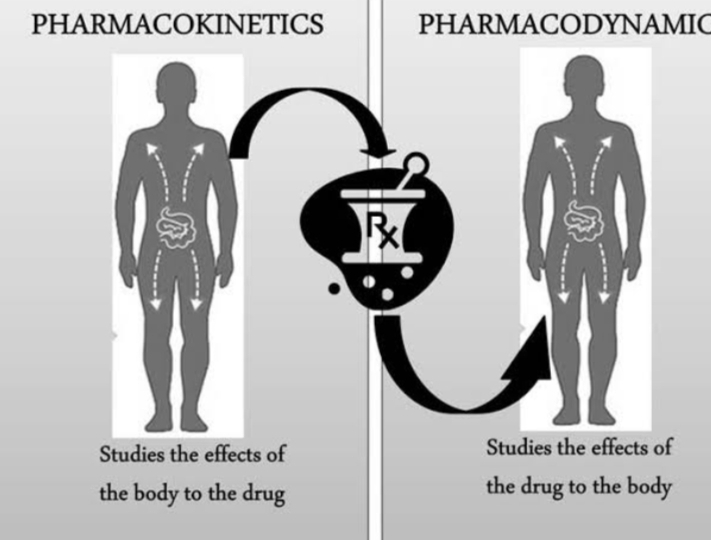
Pharmacokinetics refers to the movement of a drug through the body from the time it is taken until it is eliminated. It describes the drug’s journey and involves four main processes: absorption, distribution, metabolism, and excretion. Absorption is how the drug enters the bloodstream after administration. Distribution is how the drug spreads to different parts of the body such as organs and tissues. Metabolism is how the drug is broken down, mainly by the liver. Excretion is how the drug is removed from the body, usually through urine or feces. These four processes are often remembered as ADME.
Pharmacodynamics (PD): What the Drug Does to the Body
Pharmacodynamics focuses on the effects a drug has on the body. It explains how the drug works once it reaches its target site. This includes how the drug interacts with receptors in the body, the intensity or strength of its effect, and the relationship between the dose given and the response produced. In simple terms, pharmacodynamics explains how and why a drug produces its effects.
Key Differences Between Pharmacokinetics and Pharmacodynamics
Pharmacokinetics deals with the body’s actions on the drug, including its absorption, movement, breakdown, and removal. Pharmacodynamics deals with the drug’s actions on the body, including how it produces its effects and how strong those effects are.
Illustration Using a Pain Reliever
When a person takes a pain-relieving drug, pharmacokinetics explains how the tablet dissolves, enters the bloodstream, travels to different parts of the body, and is eventually eliminated. Pharmacodynamics explains how the drug reduces pain, how effective it is, and how long the relief lasts.
Importance in Medicine
Both pharmacokinetics and pharmacodynamics are essential in healthcare. They help professionals determine the right dosage, predict how long a drug will work, and reduce the risk of side effects. A drug that is removed too quickly may not be effective, while one that has a very strong effect may cause unwanted reactions.
Conclusion
Pharmacokinetics and pharmacodynamics work together to give a complete understanding of drug action. While pharmacokinetics describes the movement of drugs through the body, pharmacodynamics explains their effects on the body. Together, they ensure that medicines are used safely and effectively.