


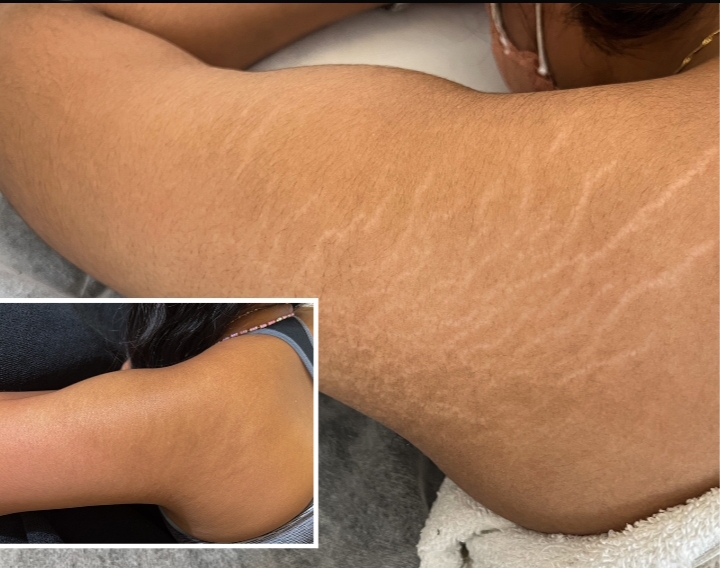
Stretch marks are one of the most common changes that occur on the skin. They can develop during pregnancy, puberty, rapid weight changes, or periods of significant muscle growth. Although they are harmless, many people look for ways to make them less visible.
So, is it actually possible to get rid of stretch marks?
The simple answer is not completely. While some treatments can make stretch marks less noticeable and improve their texture and color, there is currently no proven method that can guarantee their total removal.
What Are Stretch Marks?
Stretch marks, medically referred to as striae distensae, are a type of scarring that develops when the skin stretches or changes rapidly.
When they first appear, they may look pink, red, purple, reddish-brown, or dark brown, depending on a person’s skin tone. With time, they often become lighter and may eventually appear white or silvery.
Newer stretch marks tend to respond more effectively to treatment than older ones, although mature stretch marks can also be improved.
What Causes Stretch Marks?
Stretch marks can occur whenever the skin is forced to adapt to rapid changes in the body. Common causes include:
- Pregnancy
- Puberty and growth spurts
- Rapid weight gain or weight loss
- Quick increases in muscle size
- Certain hormonal conditions
- Prolonged use of corticosteroid medicines
Genetics can also play a role. Some people are simply more likely to develop stretch marks than others. Therefore, having stretch marks does not necessarily mean that someone has poor skin care habits.
Can Creams and Oils Make Them Disappear?
There are countless creams, oils, and home remedies advertised as solutions for stretch marks. However, their effectiveness is often overstated.
Common products such as cocoa butter, vitamin E, olive oil, and almond oil can moisturize the skin, but research has not shown that they can reliably erase existing stretch marks.
Some prescription treatments can produce more noticeable changes, particularly when the marks are still relatively new.
Tretinoin
Tretinoin is a prescription-strength retinoid that can encourage changes in collagen production and skin renewal. Research suggests that it may improve the appearance of some early stretch marks when used regularly over time.
However, tretinoin is not suitable for everyone. People who are pregnant should avoid topical retinoids, and those who are pregnant, breastfeeding, or planning a pregnancy should speak with a healthcare professional before using them.
Can Laser Treatments Remove Stretch Marks?
Laser therapy is among the treatments used by dermatologists to improve stretch marks.
Different types of lasers are designed to address different features. Some can reduce the redness associated with newer stretch marks, while fractional lasers can stimulate collagen remodeling and improve the texture and appearance of older marks.
Although laser treatments can produce visible improvement, they generally do not make stretch marks disappear completely. Results also differ from person to person.
Laser procedures can have side effects, including changes in skin pigmentation. This is particularly important for people with darker skin, who should have their treatment carefully assessed and performed by an experienced professional.
Does Microneedling Work?
Microneedling is another procedure commonly used for stretch marks. It involves using tiny needles to create controlled micro-injuries in the skin. The healing process that follows can stimulate collagen production and help improve the appearance and texture of the affected area.
Studies suggest that microneedling can be beneficial for stretch marks. It may also produce results comparable to certain laser treatments in some people.
However, like other procedures, microneedling is a treatment for improvement rather than complete removal.
What About Radiofrequency Treatments?
Radiofrequency therapy uses controlled energy to heat deeper layers of the skin. This process can stimulate collagen remodeling and may improve the appearance of stretch marks.
Some studies have reported promising results with radiofrequency treatments, including treatments that combine radiofrequency with microneedling.
However, research is still developing, and there is no clear evidence that one treatment works best for every person.
Do Home Remedies Work?
Home remedies may help keep the skin moisturized, but they should not be confused with treatments that remove stretch marks.
For example, applying natural oils or moisturizers may make the skin feel softer, but there is limited evidence that these products can eliminate existing marks.
Self-tanning products can temporarily make stretch marks less noticeable by reducing the contrast between the marks and surrounding skin. However, they only camouflage the marks and do not actually treat them.
Does Treating Stretch Marks Early Help?
In many cases, yes.
New stretch marks tend to respond better to certain treatments than older, mature ones. This is particularly relevant when considering prescription creams and some laser or light-based treatments.
However, older stretch marks should not automatically be considered untreatable. Procedures such as microneedling, fractional laser therapy, and radiofrequency may still improve their appearance.
Which Treatment Is Best?
There is no single treatment that is guaranteed to work for everyone.
A dermatologist will usually consider several factors before recommending a treatment, including:
- How old the stretch marks are
- Their color and texture
- Where they appear on the body
- Your skin tone
- Your general health and medical history
- Whether you are pregnant or breastfeeding
- How much downtime you are willing to accept
- The potential side effects of the treatment
In some cases, dermatologists may combine different treatments to achieve better results. However, more research is needed to determine which combinations are most effective.
Can Stretch Marks Be Prevented?
Unfortunately, it is not always possible to prevent stretch marks.
Genetics, hormones, and rapid changes in the body can all contribute to their development. Although various creams and oils are marketed as preventive treatments, there is limited evidence that they can guarantee protection against stretch marks.
Maintaining healthy skin and avoiding unnecessary rapid changes in body weight may be helpful for overall skin health, but these measures cannot completely prevent stretch marks.
Final Thoughts
Stretch marks are difficult to remove completely, but their appearance can often be improved.
While ordinary creams and oils can moisturize the skin, they should not be expected to erase stretch marks. Treatments such as prescription retinoids, microneedling, laser therapy, and radiofrequency may provide more noticeable improvements, particularly when selected according to the person’s skin type and the age of the stretch marks.
Most importantly, stretch marks are extremely common and are generally harmless. Treatment is usually a personal cosmetic choice rather than a medical necessity.