


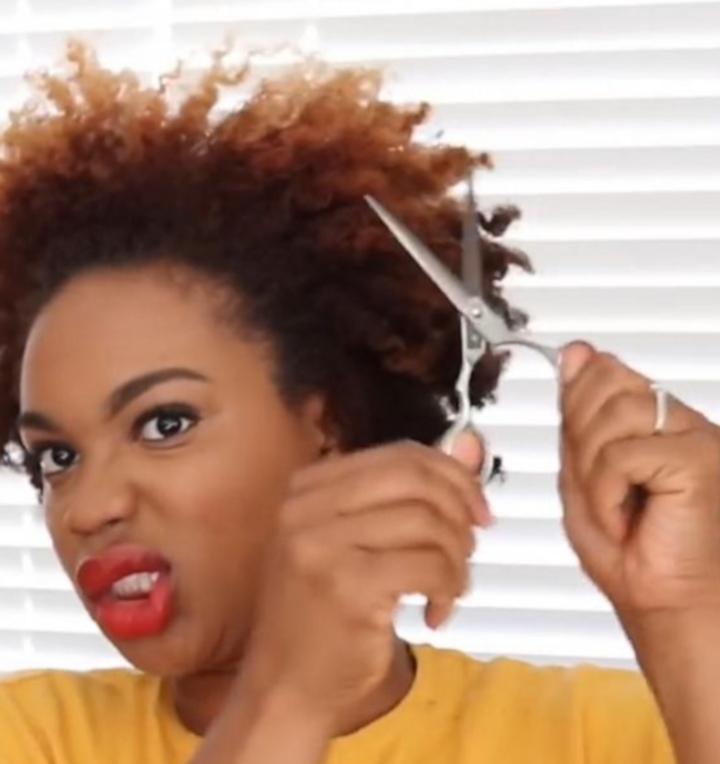
Trimming your natural hair yourself can help maintain healthy ends and reduce breakage, but it requires patience and the right technique. The goal isn’t to cut off a lot of hair it’s to remove damaged ends while preserving your hair’s overall shape and length.
If you’re new to DIY trims, focus on making small, conservative cuts rather than attempting a major haircut or layered style.
Tools You’ll Need
Before you begin, gather the following:
- Professional hair-cutting scissors
- Hair clips or elastic bands
- A wide-tooth comb
- A spray bottle filled with water
- A hand mirror or dual-mirror setup
Using sharp, dedicated hair shears is essential. Dull or household scissors can damage the hair shaft and contribute to future split ends.
Step 1: Wash and Detangle Your Hair
Start with clean, thoroughly detangled hair. Removing knots and tangles makes it easier to identify damaged ends and ensures a more even trim.
You can trim your hair while stretched, blow-dried, braided, or lightly damp, depending on your preference and hair type.
Step 2: Section Your Hair
Divide your hair into several manageable sections using clips or hair ties. Working in sections helps you stay organized and prevents uneven cutting.
Most people find that four to eight sections provide enough control during the trimming process.
Step 3: Use the Twist Method
The twist method is one of the safest ways to trim natural hair at home.
How It Works
- Take one section of hair and twist it from root to tip.
- Look for strands that stick out from the twist.
- Carefully trim the frayed or damaged pieces.
- Repeat throughout all sections of your hair.
This technique allows you to remove split or damaged ends without significantly altering your hairstyle.
Step 4: Trim the Ends Evenly
If your goal is to refresh your ends rather than spot-trim damage:
- Stretch each section of hair.
- Comb it smooth.
- Hold the ends between your fingers.
- Cut a small amount from the bottom.
For routine maintenance, trimming about a quarter to half an inch is usually sufficient.
When in doubt, remove less rather than more. You can always trim again if necessary.
Common Mistakes to Avoid
Many DIY trims go wrong because of simple errors. Avoid the following:
Using Dull Scissors
Blunt blades can fray the hair and create more damage instead of removing it.
Cutting Too Much at Once
It’s easier to remove additional hair later than to fix an overly aggressive trim.
Trimming Tangled Hair
Hair that hasn’t been properly detangled can lead to uneven results.
Ignoring Shrinkage
Natural hair often shrinks significantly when dry. Be mindful of this before deciding how much to cut.
Attempting Complex Haircuts
Unless you’re experienced, avoid creating layers or reshaping your entire hairstyle during a routine trim.
How to Check Your Results
After trimming:
- Moisturize your hair.
- Allow it to dry or return to its natural state.
- Examine your hair from different angles using a mirror.
- Make only minor adjustments if needed.
Resist the urge to keep cutting in pursuit of perfection.
How Often Should You Trim Natural Hair?
There is no one-size-fits-all trimming schedule.
Some people trim every three to four months, while others trim only when they notice:
- Split ends
- Excessive tangling
- Single-strand knots
- Increased breakage
The condition of your ends should determine when it’s time for a trim rather than a fixed calendar schedule.
Final Thoughts
Trimming your natural hair at home doesn’t have to be intimidating. With the proper tools, careful sectioning, and a conservative approach, you can maintain healthy ends without sacrificing length. Start small, focus on removing damage, and remember that healthy hair retention is often more important than holding on to unhealthy ends.