


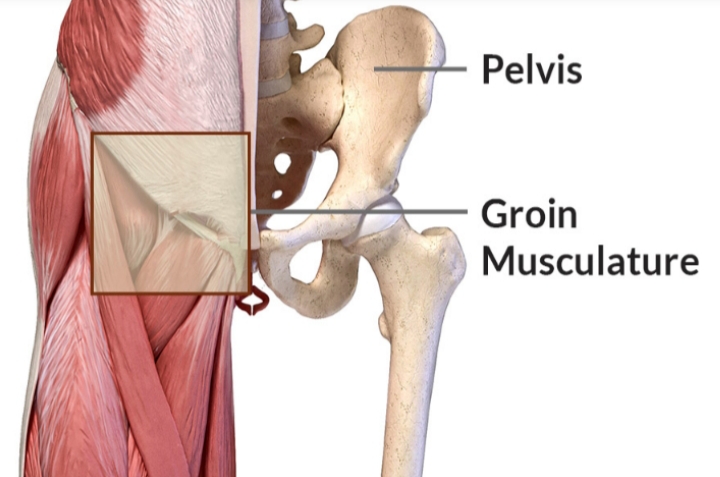
Groin pain is fairly common and can affect athletes, gym-goers, and even people who do regular daily activities. It often comes from either the hip joint itself or from the muscles and tendons around the inner thigh. Because these structures are so close together, the pain can feel similar, which makes it easy to confuse one cause for the other.
Sources of Groin Pain
The groin is the area where the upper thigh meets the pelvis. Pain in this region may be linked to:
- Problems within the hip joint
- Strains in the inner thigh or hip muscles
- Irritated tendons or ligaments
- Less commonly, conditions like hernias or nerve irritation
The most frequent causes are muscle strains and hip joint conditions.
Pain Coming from the Hip Joint
When the hip joint is the source, the problem is usually inside the joint itself, involving structures like cartilage or bone alignment.
Typical symptoms include:
- A deep, aching sensation in the groin
- Pain that feels internal rather than on the surface
- Stiffness in the hip, especially after rest or in the morning
- Difficulty moving the hip freely (such as squatting or crossing legs)
- Pain triggered by walking, twisting, or rotating the hip
Possible causes:
- Hip impingement
- Early-stage arthritis in the hip
- Labral (cartilage) tears
Hip-related pain usually develops gradually and may become worse over time.
Pain from Muscle Injuries
Muscle-related groin pain is often seen in people who are physically active, especially after sudden movements, sports, or heavy exertion.
Common signs include:
- Sudden sharp or pulling pain in the inner thigh or groin
- Pain that begins during activity or right after it
- Tenderness when touching the affected area
- Discomfort when squeezing the legs together or stretching
- In some cases, mild swelling or bruising
Common causes:
- Strain of the adductor muscles (inner thigh muscles)
- Hip flexor strain
- Overstretching or rapid changes in movement direction
Muscle injuries typically improve with rest and gradual recovery.
How to Tell Them Apart
| Feature | Hip Joint Problem | Muscle Injury |
|---|---|---|
| Type of pain | Deep and dull | Sharp and localized |
| Onset | Gradual | Sudden |
| Movement effect | Stiffness, reduced motion | Pain with specific actions |
| Pain location | Deep in groin/hip | Inner thigh or surface groin |
| Recovery time | Often slower | Usually faster with rest |
Warning Signs to Watch For
It is advisable to seek medical attention if:
- Pain persists beyond one or two weeks
- Walking or weight-bearing becomes difficult
- There is visible swelling or bruising
- Pain is getting progressively worse
- The hip feels like it locks, clicks, or gives way
Basic Self-Care Tips
For mild muscle strains:
- Rest and avoid intense activity
- Use ice during the first couple of days
- Start gentle stretching once pain improves
- Return to exercise gradually
For possible hip joint issues:
- Limit activities that stress the hip
- Avoid deep bending or twisting movements
- Consider physiotherapy evaluation
- Get medical imaging if recommended
Conclusion
Groin pain can originate from either the hip joint or surrounding muscles, and distinguishing between them depends on the nature and pattern of symptoms. Hip problems tend to feel deep and stiff, while muscle injuries are usually sharp and linked to specific movements. If the pain persists or worsens, professional medical assessment is important for proper diagnosis and treatment.