


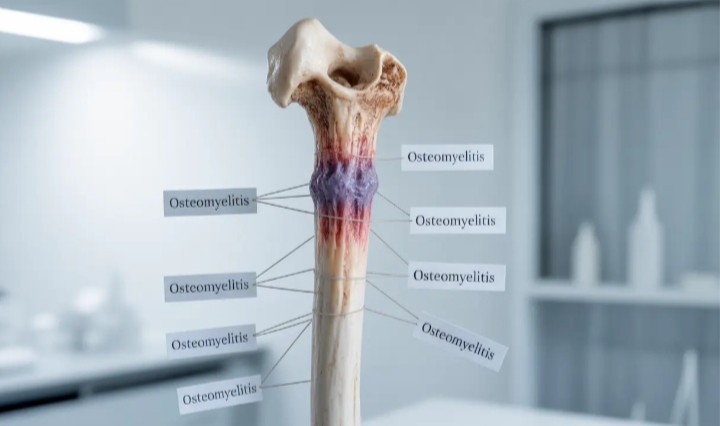
Osteomyelitis is a serious infection that affects the bones and should be treated early to avoid complications. It usually occurs when germs enter the bone through the bloodstream, an open injury, or after surgery.
Early Symptoms to Watch For
1. Ongoing Deep Bone Pain
A constant, deep aching pain in the affected bone is one of the most common early signs. The discomfort may increase when the area is touched or moved.
2. Swelling, Heat, and Redness
The skin around the infected area may appear swollen, feel warm, and look red, showing signs of inflammation.
3. Fever and General Illness
Many people develop fever, chills, and a general feeling of being unwell as the body fights the infection.
4. Tiredness and Low Energy
Unusual fatigue or weakness may occur even without heavy activity.
5. Difficulty Moving the Area
If the infection is near a joint, it may cause stiffness and make movement painful or limited.
6. Discharge from the Site
In more severe cases, pus or fluid may come out of a wound near the infected bone.
7. Slow Healing Wounds
Cuts or injuries close to the infection site may take longer than usual to heal or may worsen instead of improving.
People More at Risk
Certain groups are more likely to develop this condition, such as:
- People living with diabetes
- Individuals with weakened immunity
- Patients who recently had surgery or injuries
- Those with poor blood circulation
When to Get Medical Attention
If symptoms like persistent pain, swelling, or fever appear especially after an injury or surgery it is important to see a healthcare professional quickly for proper diagnosis and treatment.
Conclusion
Osteomyelitis can become severe if ignored, but early detection and treatment greatly improve recovery outcomes.