


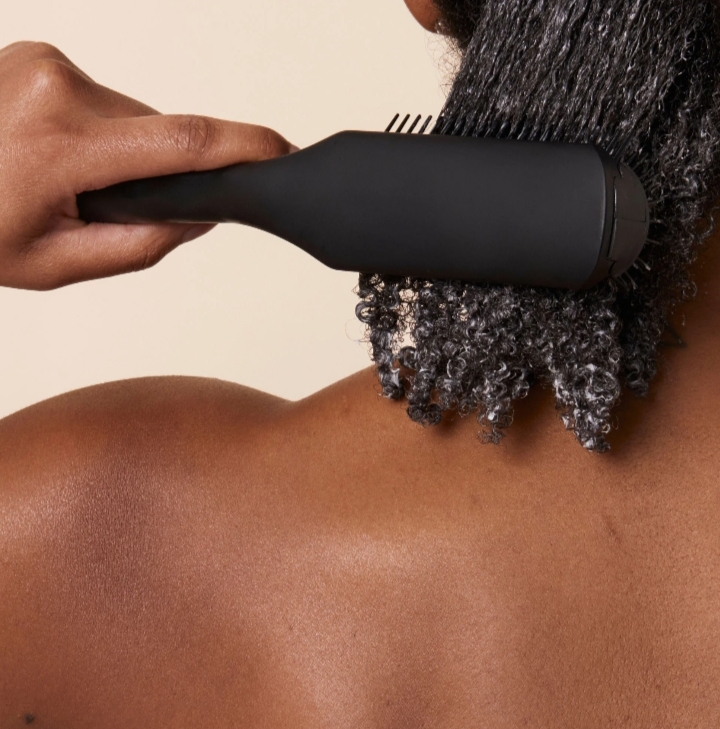
Single-strand knots, often referred to as fairy knots, are a common issue for people with curly and coily hair. They occur when one strand bends, curls, or wraps around itself until it forms a small knot.
These knots are usually not serious on their own, but they can make detangling more challenging. If they are repeatedly pulled or manipulated, they may also contribute to hair breakage. While completely preventing them can be difficult, the right hair-care habits can help reduce their frequency.
Why Do Single-Strand Knots Happen?
The natural shape of curly and coily hair makes it easier for individual strands to loop and catch onto themselves. The tighter the curl pattern, the more likely this can happen.
Other factors that may encourage single-strand knots include:
- Lack of moisture.
- Friction from pillows, clothing, or other surfaces.
- Frequent handling and restyling.
- Shed hairs becoming trapped among other strands.
- Rough or damaged ends.
- Wearing the hair loose for long periods.
- Rough or hurried detangling.
Understanding these causes can help you make changes that reduce tangling.
Keep Your Hair Hydrated
When hair becomes excessively dry, the strands may experience more friction and become more likely to catch on each other.
Develop a moisturizing routine suited to your hair. Depending on your needs, this might include water, a leave-in conditioner, or a lightweight moisturizing cream.
However, avoid piling on products simply to make your hair feel moisturized. Excessive product use can create buildup and make the hair harder to manage.
Detangle With Care
Gentle and consistent detangling can help prevent shed hairs from wrapping around healthy strands.
Divide your hair into smaller sections and work through each section slowly. Start at the ends and gradually move toward the roots rather than forcing a comb through the entire length at once.
Finger detangling or using a wide-tooth comb can make it easier to locate knots and remove them with less pulling.
Choose Products With Good Slip
A conditioner or detangling product with plenty of slip can help strands move past each other more easily.
Detangle when your hair has enough moisture or conditioning to reduce friction. Avoid aggressively pulling through dry, tightly tangled hair, as this can cause unnecessary stress and breakage.
Protect Your Hair While Sleeping
Nighttime friction can cause hair to become tangled, particularly when it rubs against a rough pillowcase.
Consider loosely putting your hair into twists, braids, or another low-tension style before bed. You can also use a satin or silk bonnet, scarf, or pillowcase to reduce friction.
Make sure any nighttime style is comfortable and does not put unnecessary pressure on your hairline.
Reduce Unnecessary Handling
Repeatedly touching, separating, combing, or restyling your hair can increase the chances of tangling.
Once your hair is styled, try to leave it alone as much as possible. When you need to manipulate it, use gentle movements and avoid excessive pulling.
Low-manipulation or protective styles can also help reduce daily handling. However, they should be installed comfortably and removed before they begin causing excessive tangling or tension.
Take Care of Your Ends
The ends of your hair have been exposed to the most wear and are often more fragile than the rest of the strand. Rough, split, or damaged ends can easily catch onto other hairs.
Check your ends regularly and consider trimming sections that are significantly damaged. Although trimming does not increase the speed of hair growth, it can help remove damaged portions and make the hair easier to manage.
Try Gentle Stretching Techniques
Keeping curly or coily hair gently stretched may reduce the amount of curling and wrapping that contributes to fairy knots.
Simple techniques such as loose braids, twists, or banding can help stretch the strands without applying excessive heat or tension.
Choose methods that feel comfortable and avoid styles that pull tightly at the roots, edges, or scalp.
Adjust Your Wash-Day Routine
The way you wash your hair can also affect how much it tangles.
Before washing, gently separate large tangles rather than immediately placing heavily tangled hair under running water. While shampooing, focus on the scalp and avoid vigorously rubbing the lengths together.
Applying conditioner and working in sections can also make detangling easier and reduce unnecessary pulling.
Handle Knots Carefully
When you find a tiny knot, resist the urge to pull at it repeatedly. Excessive tugging can weaken or stretch the strand.
If the knot can be gently loosened with your fingers, take your time and work it apart. If it is extremely tight and cannot be removed without damaging the strand, carefully cutting the individual strand may be less harmful than continuing to pull on it.
Accept That Some Knots Are Normal
Even with excellent hair-care habits, people with curly and coily textures may still experience occasional single-strand knots. Their presence does not necessarily mean that something is wrong with your routine.
Instead of trying to eliminate every knot, focus on reducing excessive tangling and preventing unnecessary breakage.
Conclusion
Single-strand knots are a common feature of caring for curly and coily hair, but you can take steps to minimize them. Keeping your hair moisturized, detangling gently, protecting it from friction, reducing manipulation, and maintaining your ends can all help.
Most importantly, be patient with your hair. A gentle, consistent routine can reduce unnecessary tangling and help keep your strands easier to manage while minimizing breakage.