


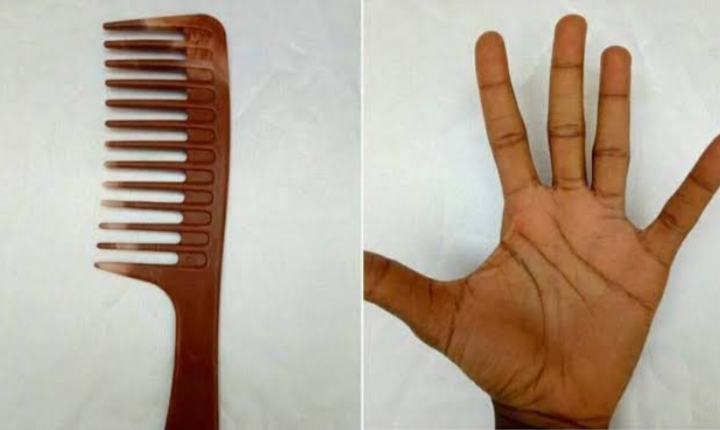
Detangling hair is where most breakage happens, especially for curly, coily, or easily knotted textures. Two common methods—using your fingers or a comb—both work, but they don’t affect hair in the same way. The difference lies more in technique than the tool itself.
Finger Detangling
Finger detangling involves carefully separating knots using your hands instead of a tool.
Benefits
This method gives you better control because you can feel each knot and gently ease it apart. It reduces the chance of pulling too hard or breaking strands suddenly. For delicate or tightly curled hair, this approach is often considered the safest.
It also helps you remove shed hair gradually without forcing it out, which lowers stress on the hair shaft.
Drawbacks
The main downside is that it takes time. Thick or heavily tangled hair can require a long detangling session. If done carelessly or rushed, it can still cause breakage.
Using a Comb
Combs—especially wide-tooth or detangling types—are designed to speed up the process.
Benefits
A comb can cover more hair quickly and is useful for working through sections efficiently. When used on damp, conditioned hair, it can glide through strands with minimal resistance.
It also helps evenly distribute products like conditioner, making the hair easier to manage.
Drawbacks
If the hair is dry or the comb is used roughly, it can pull on knots and cause snapping. This makes technique and hair condition very important.
Which Method Protects Hair Better?
Finger detangling is generally gentler because it allows more precision and reduces force on tangled areas. This often results in less breakage, especially for fragile or highly textured hair.
That said, a wide-tooth comb is not harmful when used correctly. On well-moisturized hair, it can detangle effectively without causing damage.
Ultimately, the outcome depends less on the tool and more on how carefully it is used.
Best Approach for Minimal Breakage
Many people achieve the best results by combining both methods. Starting with fingers helps loosen tough knots, and finishing with a wide-tooth comb smooths the hair more quickly.
Helpful practices include:
- Detangling while hair is damp and conditioned
- Working in small sections
- Starting from the ends and moving upward
- Using products that add slip
- Avoiding rushing through knots
Final Thoughts
Finger detangling is usually gentler and can reduce breakage, while combs offer speed and efficiency when used properly. The healthiest results come from careful handling, good moisture, and a patient approach rather than relying on one method alone.