


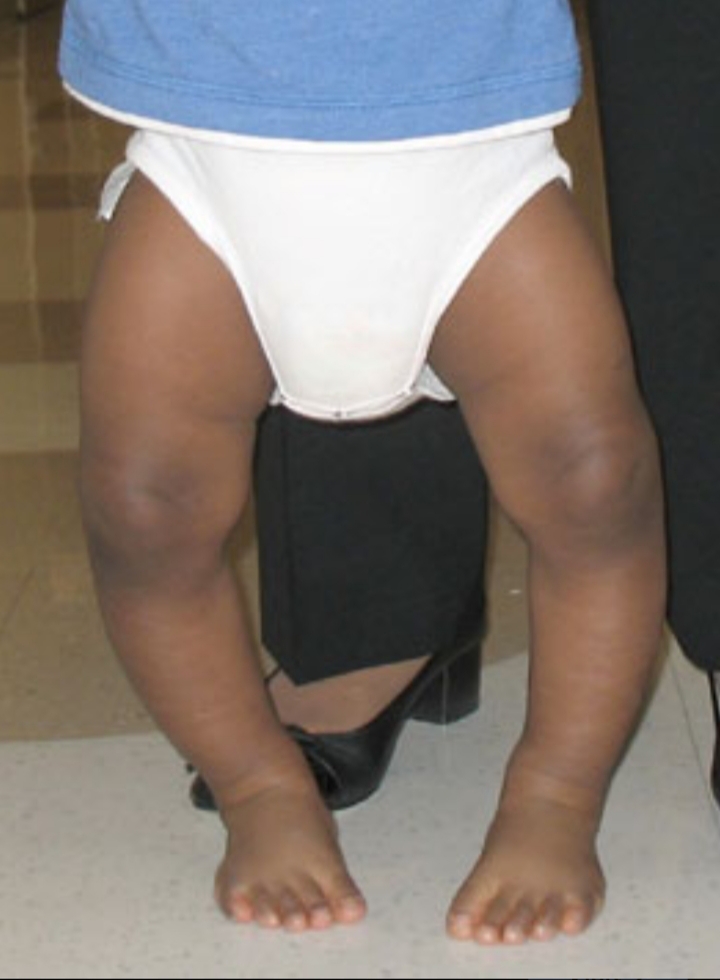
Blount’s disease is a condition that affects the growth of the shin bone (tibia) in children, leading to a noticeable outward curvature of the legs, commonly called bowed legs. Unlike the normal bowing seen in many toddlers that usually corrects naturally, this condition tends to worsen if it is not treated.
How It Appears
The main sign is a bow-shaped leg alignment, where the knees curve outward while the lower legs angle inward. It can affect one leg or both, and the deformity may become more obvious as the child grows.
Causes and Risk Factors
Blount’s disease happens when the upper part of the shin bone grows unevenly near the knee joint. While the exact cause is not always known, certain factors increase the risk:
- Early walking or excessive pressure on the legs at a young age
- Being overweight, which increases stress on the growth plates
- Genetic or structural influences affecting bone development
This uneven pressure interferes with normal bone growth, leading to progressive bending.
Types of the Condition
There are two main forms:
- Infantile Blount’s disease: Seen in very young children, usually under age 4, and is more common
- Adolescent Blount’s disease: Occurs in older children and teenagers, often associated with rapid weight gain during growth
Signs and Symptoms
- Gradual bowing of the legs
- Uneven gait or limping
- Possible knee or leg discomfort in older children
- Worsening alignment rather than natural correction
Diagnosis
Doctors diagnose the condition through physical examination and imaging tests like X-rays, which reveal abnormal growth patterns in the tibia. Early diagnosis is important to prevent permanent deformity.
Treatment Options
Treatment varies depending on severity and age:
- Bracing: Often effective in younger children if detected early
- Monitoring: For mild or slowly progressing cases
- Surgery: Used in more severe cases to realign the bone
In conclusion
Blount’s disease should not be confused with normal developmental bowing, as it does not resolve on its own. If a child’s legs appear increasingly bowed over time, medical attention is important. Early treatment can greatly improve correction and long-term mobility.