


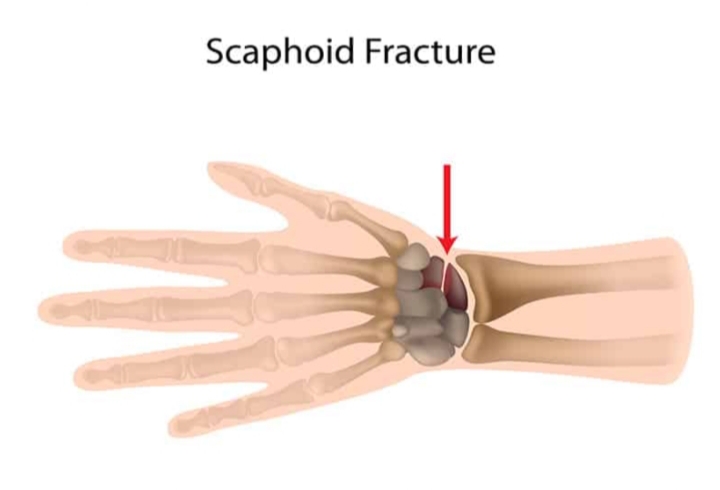
The scaphoid is a small but crucial bone on the thumb side of the wrist. When it fractures, it often creates diagnostic and treatment challenges, which is why it is widely regarded as one of the most problematic wrist injuries in orthopaedics.
Even though it is tiny, the scaphoid is essential for normal wrist movement and stability. Its unusual blood supply and position make it prone to complications if injuries are not identified and managed early.
Location and Importance of the Scaphoid
The scaphoid is one of the eight carpal bones in the wrist, positioned near the base of the thumb. It connects the forearm bones to the rest of the wrist, helping coordinate smooth wrist motion.
It is important for:
- Allowing normal wrist movement
- Transferring force from the hand to the forearm
- Maintaining wrist stability during activity
Because of its central role, injury to this bone can significantly affect hand function.
How Scaphoid Fractures Occur
These fractures usually happen when someone falls onto an outstretched hand, with the wrist bent backward. The impact forces the scaphoid to absorb the shock.
Common causes include:
- Sports injuries (such as football or skating)
- Falls from standing height or higher
- Road traffic accidents
Young, active individuals are more commonly affected.
Why Diagnosis Is Often Difficult
Scaphoid fractures can be easy to overlook. Early symptoms may be mild and sometimes initial X-rays do not show the break clearly.
Typical signs include:
- Pain on the thumb side of the wrist
- Tenderness in the anatomical snuffbox area
- Mild swelling
- Discomfort when gripping or moving the wrist
Because of these subtle signs, suspicion remains high even when early imaging appears normal.
The Problem With Blood Supply
A major challenge with the scaphoid is its limited blood flow. Most of its blood supply enters from one direction, making some parts vulnerable if the bone breaks.
This can lead to:
- Poor healing in certain fracture locations
- Delayed union or non-healing fractures
- Bone tissue death (avascular necrosis)
This unique blood supply is a key reason these injuries are taken so seriously.
How It Is Diagnosed
If a scaphoid fracture is suspected, doctors may use:
- Repeat X-rays after some time
- MRI scans, which detect early bone injury
- CT scans for detailed fracture assessment
Early and accurate diagnosis is important to prevent long-term complications.
Treatment Approaches
Management depends on the type and location of the fracture.
Casting
- Used for stable, non-displaced fractures
- Involves immobilizing the wrist, often with a thumb spica cast
- Healing may take several weeks
Surgery
- Recommended for displaced or high-risk fractures
- Uses screws or pins to stabilize the bone
- May allow faster recovery in some cases
Possible Complications
If treatment is delayed or inadequate, complications may include:
- Failure of the bone to heal properly (non-union)
- Loss of blood supply leading to bone death
- Development of wrist arthritis
- Reduced strength and movement
These outcomes can seriously affect hand function.
Recovery Process
Even after the bone heals, rehabilitation is important. Therapy focuses on restoring:
- Strength
- Flexibility
- Normal wrist function
Recovery time varies depending on injury severity and treatment method.
Why Early Care Is Essential
Scaphoid fractures are small injuries with potentially big consequences. Prompt treatment greatly improves healing chances, while delays can lead to long-term problems.
For this reason, wrist injuries after a fall are often treated cautiously until a scaphoid fracture is ruled out.
Conclusion
Scaphoid fractures are deceptively simple injuries that can become complex if missed. Their subtle symptoms, difficult diagnosis, and limited blood supply make them especially challenging.
Early recognition and proper management are essential to ensure good recovery and prevent long-term wrist dysfunction.