


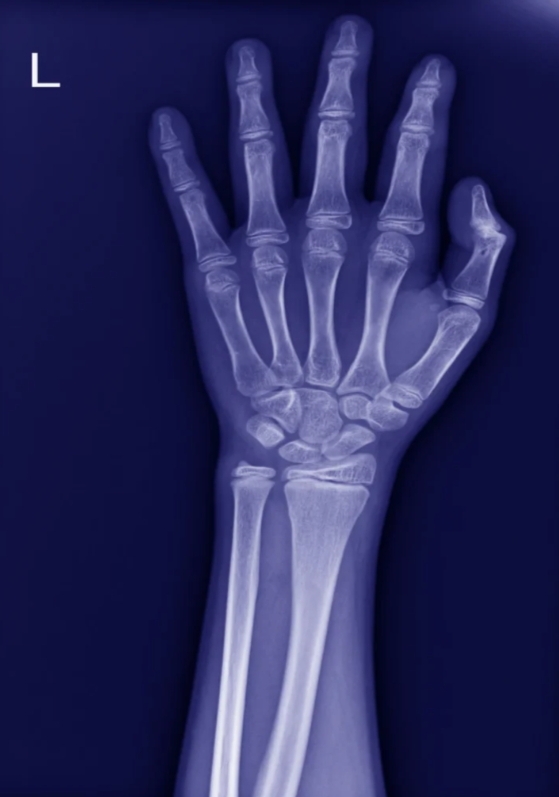
Fractures in children differ from those in adults because their bones are still growing and are more flexible. Instead of breaking completely, children’s bones often bend or partially crack when force is applied. This leads to specific fracture patterns such as greenstick and buckle fractures, which are commonly seen in .
Children’s bones contain more collagen, making them softer and more elastic. This allows them to absorb impact better, but it also means injuries may present as incomplete fractures rather than full breaks. Growth plates also play a role in how these injuries occur and heal.
A greenstick fracture happens when a bone bends and cracks on one side without breaking entirely. It is similar to bending a fresh branch, where one side splinters while the other remains intact. These fractures often show a visible bend and are more common in younger children. Because the bone is partially deformed, treatment may involve aligning it properly before immobilization to prevent healing in an abnormal position.
A buckle fracture, also called a torus fracture, results from compression. Instead of cracking, the bone develops a small bulge on one side. This type of fracture is stable and does not involve a full break. It frequently occurs in the wrist after a fall onto an outstretched hand and is generally less serious than a greenstick fracture.
The key difference between the two lies in the mechanism of injury. Greenstick fractures involve bending with a partial break, while buckle fractures are caused by compression without a true fracture line. As a result, greenstick fractures may require more careful management, whereas buckle fractures are usually straightforward.
Diagnosis is typically made through physical examination and X-rays. A greenstick fracture appears as a break on one side of the bone, while a buckle fracture shows a slight bulging of the outer bone layer.
Treatment varies based on the type of fracture. Greenstick fractures often need casting and sometimes gentle realignment. Buckle fractures are usually treated with a splint or soft cast and tend to heal quickly. In both cases, limiting activity and managing pain are important.
Children generally recover faster than adults due to active bone growth. With proper care, both types of fractures usually heal well without long-term problems. Understanding the differences between greenstick and buckle fractures helps ensure appropriate treatment and supports a safe return to normal activities.