


Introduction
Pharmacokinetics and pharmacodynamics are fundamental areas of pharmacology that help explain how medicines behave in the body. While the two concepts are closely related, they focus on different aspects of drug action. Understanding them is important for ensuring that medications are used safely and effectively.
What is Pharmacokinetics?
Pharmacokinetics describes how the body processes a drug after it is administered. It follows the movement of a drug through the body from the moment it enters until it is removed.
The process includes four major stages:
- Absorption – the movement of the drug from its site of administration into the bloodstream.
- Distribution – the transport of the drug to various tissues and organs.
- Metabolism – the chemical breakdown or modification of the drug, mainly by the liver.
- Excretion – the elimination of the drug and its metabolites from the body, usually through urine.
Example
When a person takes a tablet for a headache, pharmacokinetics explains how the medication is absorbed into the blood, carried to different parts of the body, metabolized, and eventually excreted.
What is Pharmacodynamics?
Pharmacodynamics refers to the effects a drug produces in the body. It examines how a medication interacts with its target sites and brings about therapeutic or adverse effects.
Pharmacodynamics is concerned with:
- The drug’s mechanism of action.
- Interactions between the drug and cellular receptors.
- The strength and duration of the drug’s effects.
- Both beneficial outcomes and side effects.
Example
After a pain-relieving drug reaches its target tissues, it reduces pain by acting on specific receptors. Pharmacodynamics explains this interaction and the resulting effect.
Differences Between Pharmacokinetics and Pharmacodynamics
| Pharmacokinetics | Pharmacodynamics |
|---|---|
| Deals with how the body handles a drug. | Deals with how a drug affects the body. |
| Includes absorption, distribution, metabolism, and excretion. | Includes drug action, receptor binding, and physiological responses. |
| Influences the concentration of a drug in the body. | Influences the intensity of the drug’s effects. |
| Focuses on drug movement through the body. | Focuses on the body’s response to the drug. |
A Simple Memory Aid
A useful way to distinguish the two concepts is:
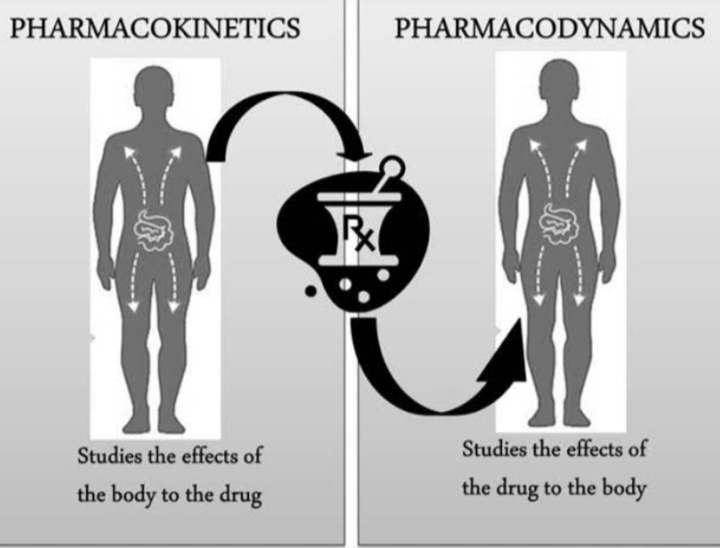
- Pharmacokinetics = the body’s actions on the drug.
- Pharmacodynamics = the drug’s actions on the body.
In simple terms, pharmacokinetics tracks the drug’s journey, while pharmacodynamics explains what happens when the drug reaches its target.
Conclusion
Pharmacokinetics and pharmacodynamics are closely connected in determining how medications work. Pharmacokinetics focuses on the processes that affect a drug’s movement and concentration in the body, whereas pharmacodynamics explains the biological effects the drug produces. Together, these concepts provide the foundation for understanding drug therapy and optimizing patient treatment.