


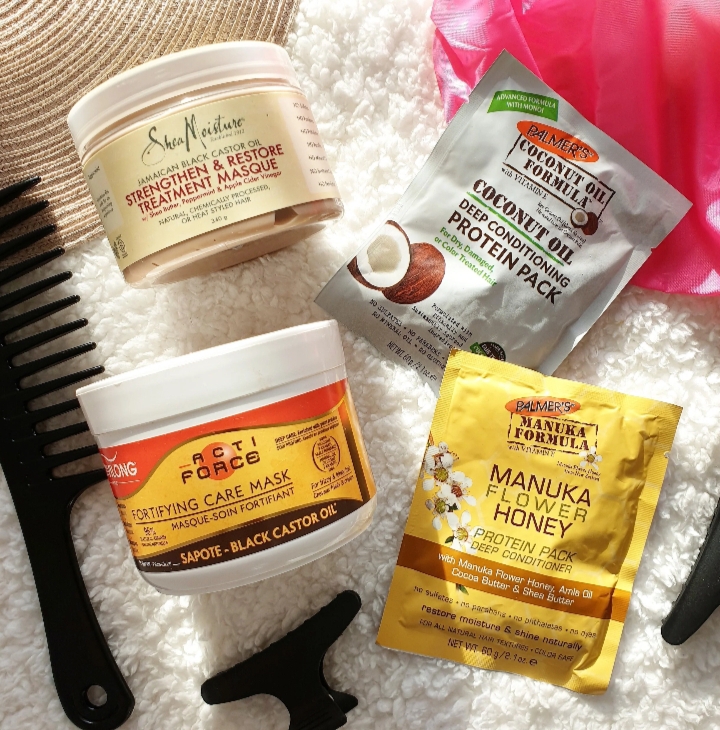
For 4C hair, the goal usually isn’t choosing protein or moisture it’s maintaining the right balance between the two.
What moisture does
Moisture treatments help improve softness, flexibility, and manageability. They typically contain ingredients such as:
- Water
- Humectants (glycerin, aloe vera, honey)
- Conditioning agents and emollients
- Oils and butters that help reduce moisture loss
4C hair tends to dry out more easily because natural scalp oils have a harder time traveling down tightly coiled strands, so regular moisturizing deep conditioning is often beneficial.
What protein does
Protein treatments temporarily reinforce the hair shaft and can help reduce breakage, especially if hair has been damaged by:
- Chemical processing (relaxers, color)
- Heat styling
- Excessive manipulation
- Environmental wear and tear
Common proteins include hydrolyzed keratin, silk protein, wheat protein, and collagen.
Signs you may need more moisture
Your hair:
- Feels dry, rough, or brittle
- Tangles easily
- Lacks elasticity
- Feels hard after washing
In this case, prioritize moisturizing deep conditioners.
Signs you may need more protein
Your hair:
- Feels overly soft, mushy, or limp when wet
- Stretches excessively before breaking
- Experiences increased breakage despite being moisturized
- Struggles to hold styles
A protein treatment may help restore strength.
Signs of too much protein
Your hair:
- Feels stiff or straw-like
- Snaps rather than stretches
- Seems dry even after conditioning
Switch to moisturizing treatments and reduce protein frequency.
A practical routine for many 4C hair types
- Deep condition with a moisturizing treatment weekly or every wash day.
- Use a protein treatment every 4–8 weeks if your hair is healthy.
- Use protein more frequently (for example every 2–4 weeks) if your hair is color-treated, heat-damaged, or otherwise weakened.
- Always follow stronger protein treatments with moisture-focused conditioning.
Ingredients to look for
Moisture-focused:
- Aloe vera
- Glycerin
- Honey
- Panthenol
- Shea butter
- Fatty alcohols (cetyl alcohol, stearyl alcohol)
Protein-focused:
- Hydrolyzed keratin
- Hydrolyzed wheat protein
- Hydrolyzed silk protein
- Hydrolyzed rice protein
- Collagen
The best balance depends on your hair’s condition. If your 4C hair is natural, not color-treated, and generally healthy, you’ll usually benefit more from regular moisture-focused deep conditioning with occasional protein treatments as needed. If you tell me whether your hair is low-porosity or high-porosity (and whether it’s chemically treated or heat-damaged), I can suggest a more specific deep-conditioning schedule.