


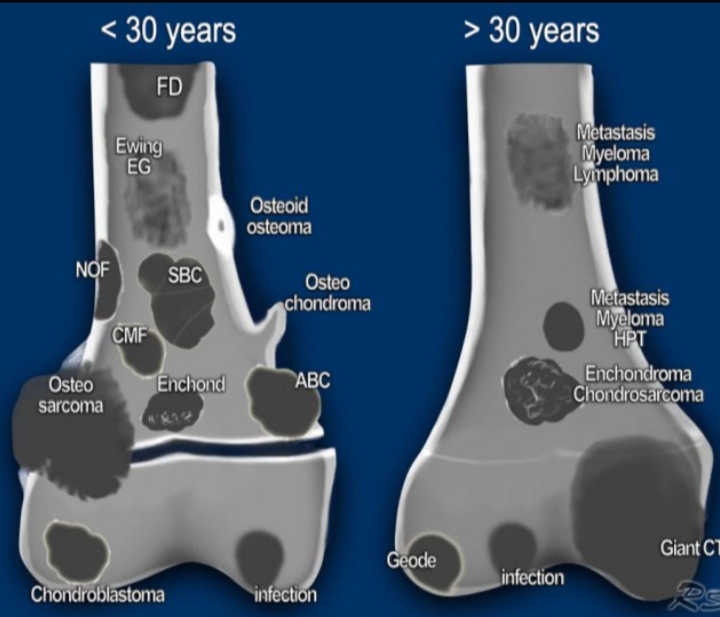
Bone tumors are abnormal growths that form in bone tissue. They are broadly classified as either benign (non-cancerous) or malignant (cancerous). Although both affect bones, they differ significantly in behavior, spread, and severity.
Benign Bone Tumors
Benign tumors are non-cancerous growths that usually develop slowly and remain confined to their original location.
Main characteristics:
- Slow growth
- Well-defined borders
- Do not spread to other parts of the body
- Generally less aggressive
Examples include:
- Osteochondroma
- Osteoid osteoma
- Enchondroma
Symptoms:
- Often no symptoms at all
- Mild pain or swelling in some cases
- Sometimes discovered incidentally on scans
Treatment:
- Observation if harmless and small
- Surgical removal if they cause discomfort or functional problems
Overall, benign tumors usually have a good prognosis.
Malignant Bone Tumors
Malignant tumors are cancerous growths that can grow rapidly, destroy bone tissue, and spread to other parts of the body.
Main characteristics:
- Fast or aggressive growth
- Irregular, poorly defined edges
- Ability to spread (metastasize)
- More serious and potentially life-threatening
Examples include:
- Osteosarcoma
- Ewing sarcoma
- Chondrosarcoma
Symptoms:
- Persistent or worsening bone pain
- Swelling or a visible lump
- Fractures after minor injury
- Fatigue or weight loss in advanced stages
Treatment:
- Surgery
- Chemotherapy
- Radiotherapy (depending on type and stage)
Outcomes vary depending on early detection and tumor type.
Key Differences
- Benign: Non-cancerous, slow-growing, localized
- Malignant: Cancerous, fast-growing, can spread
Easy Way to Remember
- Benign = generally harmless
- Malignant = more aggressive and serious
Summary
Benign bone tumors are usually manageable and not life-threatening, often requiring minimal treatment. Malignant bone tumors are cancerous, more aggressive, and require early and intensive medical care for better outcomes.