


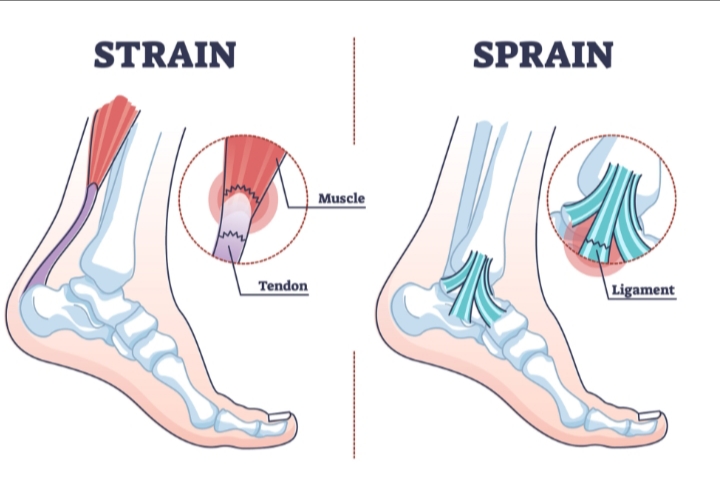
Sprains, strains, and fractures are common injuries, but they affect different parts of the body and vary in severity. Understanding the differences helps you recognize symptoms and choose the right care.
Sprain
A sprain is an injury to the ligaments, the strong tissues that connect bones at a joint.
Typical causes:
- Twisting or awkward movement of a joint
- Falls or sudden impact
Common signs:
- Pain around the joint
- Swelling and bruising
- Reduced movement
- A feeling of weakness or instability
Example: Rolling your ankle while walking on an uneven surface.
Strain
A strain affects muscles or tendons, which connect muscles to bones.
Typical causes:
- Overstretching a muscle
- Lifting something incorrectly
- Sudden forceful movement
Common signs:
- Muscle pain or tenderness
- Weakness
- Cramping or spasms
- Mild swelling
Example: Pulling a muscle during exercise or heavy lifting.
Fracture
A fracture is a break or crack in a bone.
Typical causes:
- Falls or accidents
- Strong direct impact
- Repeated stress over time
Common signs:
- Severe pain
- Swelling and bruising
- Difficulty moving the area
- Possible deformity
Example: Broken arm or wrist after a fall.
Main Differences
- Sprain: Ligament injury (around joints)
- Strain: Muscle or tendon injury
- Fracture: Bone injury
Easy Way to Remember
- Sprain → ligaments
- Strain → muscles/tendons
- Fracture → bones
When to Seek Medical Help
Get medical attention if:
- Pain is severe or doesn’t improve
- You cannot move or use the area
- There is visible swelling or deformity
- Symptoms worsen over time
Summary
Sprains and strains involve soft tissues and are usually less serious, while fractures involve bones and often need more intensive treatment. Correctly identifying the injury helps ensure proper healing and prevents complications.