


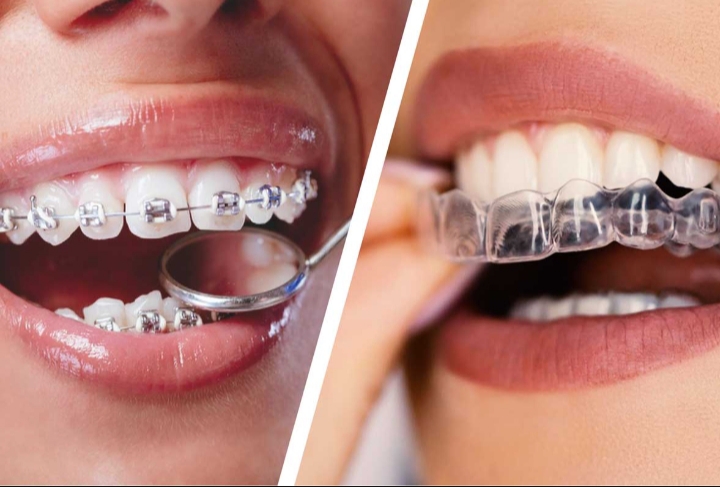
Straightening teeth has never been more accessible, with Invisalign and traditional braces being two of the most popular options. Both can correct misaligned teeth, overcrowding, and bite issues, but they differ in appearance, convenience, and suitability. Understanding the pros and cons of each can help you choose the best option for your dental needs.
What is Invisalign?
Invisalign uses a series of clear, custom-made aligners to gradually shift teeth into place. The aligners are removable and should be worn for 20-22 hours a day, with new sets typically swapped every one to two weeks.
What are Braces?
Traditional braces consist of metal or ceramic brackets attached to the teeth, connected by wires that are periodically tightened to move teeth into the desired position. Braces are fixed, remaining in place for the duration of treatment.
Invisalign: Advantages and Disadvantages.
Advantages:
1.Discreet Appearance – Clear aligners are nearly invisible, making them ideal for adults and teens who prefer a subtle look.
2.Removable – They can be taken out when eating, brushing, or flossing, making oral hygiene easier.
3.Comfortable – Smooth plastic aligners reduce irritation to gums and cheeks compared to metal brackets.
4.Fewer Orthodontist Visits – Many aligners can be given at once, reducing the number of in-office adjustments needed.
5.No Food Restrictions – Aligners are removed during meals, so you can eat any food without worry.
Disadvantages:
1.Requires Discipline – Aligners must be worn consistently; failing to do so can slow progress.
2.Not for Severe Cases – Complex alignment or bite issues may require traditional braces for effective results.
3.Cost – Invisalign is often more expensive than braces.
4.Easy to Misplace – Since they are removable, aligners can be lost or forgotten.
Braces: Advantages and Disadvantages
Advantages:
1.Effective for Complex Cases – Braces can treat severe misalignments and bite issues better than Invisalign.
2.No Compliance Issues – Fixed appliances ensure consistent treatment without relying on patient discipline.
3.Potentially Faster for Complex Cases – Braces may achieve results quicker in severe dental conditions.
4.Cannot Be Lost – Being fixed to the teeth eliminates the risk of losing them.
Disadvantages:
Q.Noticeable Appearance – Metal braces are visible, though ceramic options are slightly less conspicuous.
2.Oral Hygiene Challenges – Braces trap food, making brushing and flossing more difficult.
3.Dietary Restrictions – Sticky or hard foods can damage brackets and wires.
4.Discomfort – Braces can irritate gums and cheeks and may cause soreness after adjustments.
5.Frequent Orthodontist Visits – Braces require regular check-ups and wire tightening.
Which Option is Right for You?
1.Complexity of Dental Issues: Severe misalignment or bite problems often require braces, while mild to moderate cases may be suitable for Invisalign.
2.Aesthetic Preference: If you want a discreet treatment, Invisalign is less visible.
3.Lifestyle and Convenience: Invisalign allows for flexibility and easier oral care, but requires discipline. Braces are low-maintenance in terms of compliance.
4.Budget: Invisalign generally costs more, which may influence your decision.
Both Invisalign and traditional braces can effectively straighten teeth, but each comes with its own benefits and limitations. Invisalign is perfect for those seeking a subtle, flexible option, while braces are ideal for more complex dental issues. Consulting with an orthodontist is the best way to determine which treatment aligns with your needs, lifestyle, and goals for a confident smile.