


Cardiomyopathy refers to a group of disorders that affect the heart muscle and impair its ability to pump blood efficiently. These conditions can result in serious health problems such as heart failure, abnormal heart rhythms, and even sudden cardiac death. Since many forms of cardiomyopathy produce similar symptoms such as fatigue, breathlessness, and chest pain accurate diagnosis is crucial for proper treatment and management.
Among the various diagnostic techniques available, endomyocardial biopsy is regarded as one of the most reliable methods for determining the underlying cause of cardiomyopathy. By examining a small sample of heart tissue under a microscope, physicians can obtain detailed information that may not be visible through imaging studies or laboratory tests.
Overview of Cardiomyopathy
Cardiomyopathy involves abnormalities in the structure or function of the heart muscle that are not primarily caused by conditions such as coronary artery disease, high blood pressure, or valve disorders. The main forms include:
1.Dilated cardiomyopathy (DCM) – characterized by enlargement of the heart chambers and reduced pumping ability.
2.Hypertrophic cardiomyopathy (HCM) – marked by thickening of the heart muscle, which can obstruct blood flow.
3.Restrictive cardiomyopathy – occurs when the heart muscle becomes stiff and less able to fill with blood.
4.Arrhythmogenic right ventricular cardiomyopathy (ARVC) – involves replacement of heart muscle with fatty or fibrous tissue, mainly affecting the right ventricle.
Diagnostic tools such as echocardiography and cardiac MRI can reveal structural abnormalities, but they may not always determine the exact cause of the disease.
Definition of Biopsy
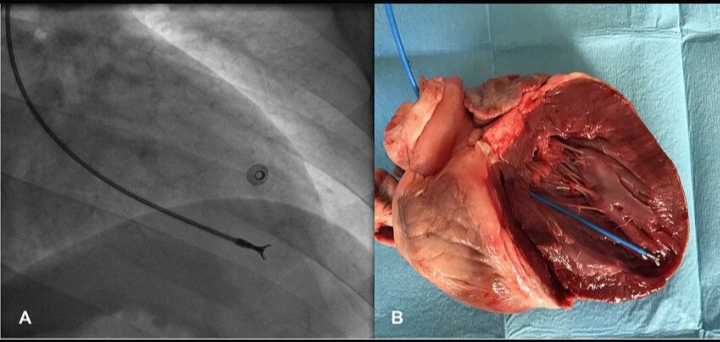
A biopsy is a medical procedure in which a small sample of tissue is removed from the body and examined microscopically to identify disease. In cardiology, this procedure is called endomyocardial biopsy (EMB) and involves taking a small piece of heart muscle for analysis.
The procedure is typically performed using a thin catheter inserted through a vein in the neck or groin and guided into the heart. A small device attached to the catheter collects tissue samples from the inner lining of the heart.
Role of Biopsy in Diagnosing Cardiomyopathy
Endomyocardial biopsy plays a crucial role in diagnosing cardiomyopathy because it allows doctors to directly study the cellular structure of heart tissue. This can help detect specific conditions responsible for the disease, including:
- Inflammation of the heart muscle (myocarditis)
- Infiltrative disorders such as Amyloidosis or Sarcoidosis
- Iron overload conditions like Hemochromatosis
- Cardiomyopathy caused by medications or toxins
- Rejection in patients who have undergone heart transplantation
- Certain inherited or metabolic disorders
Identifying the underlying cause enables healthcare providers to select the most appropriate treatment plan.
Steps Involved in the Procedure
The process of performing an endomyocardial biopsy generally includes several steps:
Patient preparation – Local anesthesia and mild sedation are administered.
Insertion of the catheter – A catheter is inserted through a vein in the neck or groin.
Guidance to the heart – Imaging techniques such as fluoroscopy are used to guide the catheter into the heart.
Collection of tissue samples – Small fragments of heart muscle are removed using specialized instruments.
Laboratory examination – The collected samples are analyzed under a microscope and may undergo additional molecular testing.
The entire procedure usually takes less than an hour, and patients are closely monitored afterward.
Benefits of Endomyocardial Biopsy
This diagnostic method offers several advantages, including:
Providing direct examination of heart tissue
Identifying inflammatory or infiltrative diseases affecting the heart
Detecting viral or immune related damage
Assisting doctors in selecting targeted therapies
In certain cases, the findings from a biopsy can significantly influence treatment decisions.
Possible Risks and Limitations
Although endomyocardial biopsy is generally considered safe, it does carry some potential risks. These include bleeding or infection at the catheter insertion site, disturbances in heart rhythm during the procedure, and, in rare cases, damage to the heart wall.
Another limitation is the possibility of sampling error, which may occur if the collected tissue does not include the diseased area.
Indications for Biopsy
Doctors may recommend endomyocardial biopsy in situations such as:
1.Sudden onset of unexplained heart failure
2.Suspected inflammation of the heart muscle
3.Rapidly worsening heart function without a clear cause
4.Suspicion of systemic diseases that affect the heart
In these situations, biopsy can provide critical diagnostic information that guides medical management.
Future Developments
Advances in medical technology are improving the accuracy and usefulness of biopsy in diagnosing cardiomyopathy. Combining biopsy results with genetic testing and advanced imaging methods can help doctors better understand the disease and provide more personalized treatment strategies.
Conclusion
Endomyocardial biopsy remains an important and highly effective tool in the diagnosis of cardiomyopathy. By allowing direct analysis of heart tissue, it helps clinicians determine the precise cause of myocardial disease. Although it is not required for every patient, when used appropriately, biopsy can provide definitive diagnostic information and guide effective treatment approaches.