


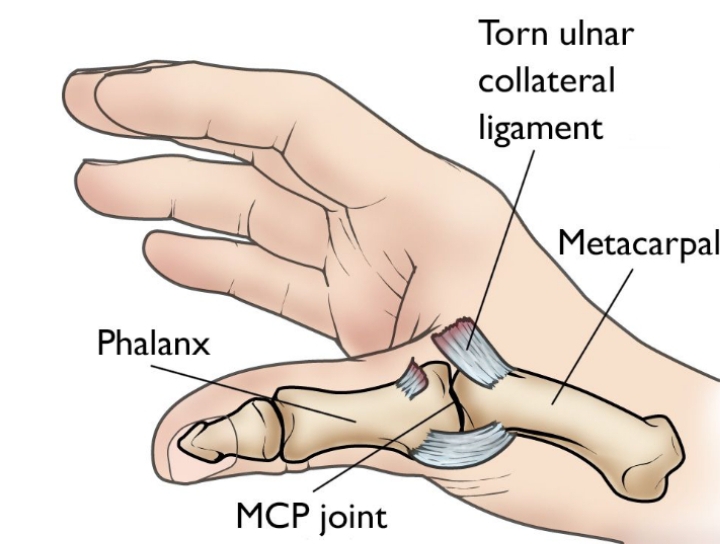
The ulnar collateral ligament (UCL) of the thumb is an important stabilizing ligament located at the metacarpophalangeal (MCP) joint, which is the base joint where the thumb connects to the hand.
What it is
The UCL is a tough band of tissue found on the inner side of the thumb’s base joint, positioned toward the index finger. It helps maintain proper alignment and stability of the thumb during gripping and pinching activities.
Function of the UCL
This ligament plays several key roles, including:
- Preventing the thumb from moving too far away from the hand
- Providing stability during pinching and gripping movements
- Working with surrounding muscles and ligaments to control thumb motion
Without a healthy UCL, the thumb becomes weak and unstable, making everyday tasks more difficult.
Common injuries
UCL injuries usually occur when the thumb is forced outward or bent backward. This often happens during:
- Falls onto an outstretched hand
- Skiing accidents (commonly known as “skier’s thumb”)
- Contact or ball sports such as basketball or football
Symptoms may include:
- Pain at the base of the thumb on the inner side
- Swelling and bruising
- Reduced grip strength or difficulty pinching
- A feeling that the thumb is unstable or loose
- Pain during grasping or lifting objects
Levels of injury
- Mild sprain: The ligament is stretched but still intact
- Partial tear: Some fibers are torn, causing weakness
- Complete tear: The ligament is fully torn, leading to significant instability
In some complete tears, a Stener lesion may occur, where the torn ligament shifts out of position and cannot heal properly without surgical treatment.
Diagnosis
Doctors typically assess UCL injuries by:
- Examining thumb stability and movement
- Checking for pain and weakness during grip tests
- Using imaging such as X-rays to rule out fractures or MRI scans to evaluate soft tissue damage
Treatment options
Treatment depends on how severe the injury is:
- Mild cases: Rest, ice, splinting, and anti-inflammatory care
- Moderate injuries: Immobilization with a thumb spica cast or brace
- Severe tears: Surgical repair or reconstruction of the ligament
Recovery time
- Mild injuries: a few weeks
- Moderate injuries: around 4–6 weeks or longer
- Surgical cases: several months, including rehabilitation
Conclusion
The ulnar collateral ligament of the thumb is essential for maintaining strength and stability during gripping and pinching. Injuries to this ligament, especially from sports or falls, can significantly affect hand function. However, with proper diagnosis and treatment, most cases recover well and restore normal thumb use over time.